



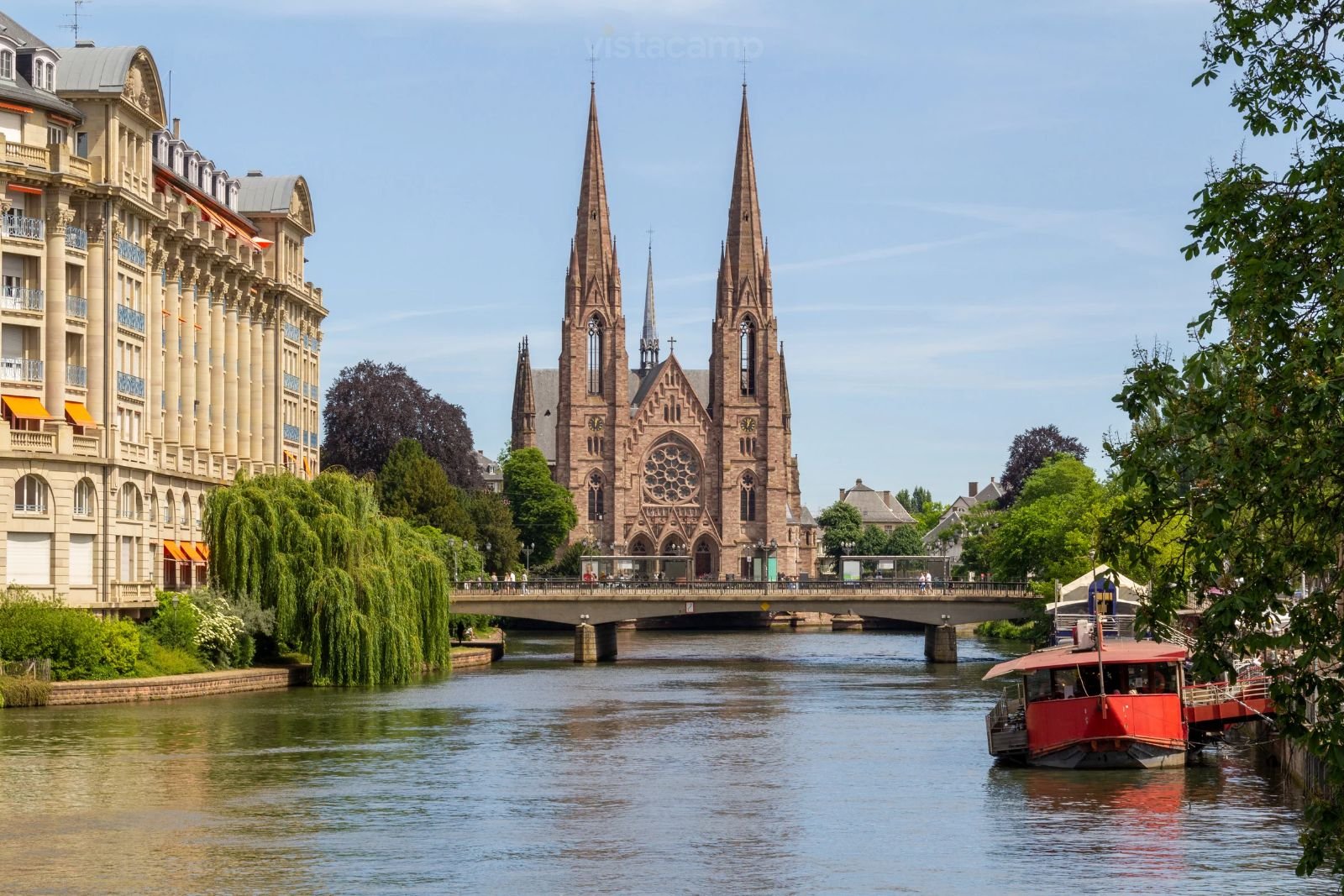
Strasbourg
At a glance
Strasbourg blends a UNESCO-listed old town, a 142 m pink sandstone cathedral and canal-side Petite France into one easy, walkable day out. Park on the edge, hop on the tram and explore.
- UNESCO Old Town Grande Île and the Neustadt both hold World Heritage status
- Pink Cathedral Climb 332 steps beneath a 142 m spire for rooftop views
- Petite France Half-timbered houses and waterside lanes straight from a storybook
- Canal Cruises A 70-minute boat trip shows the highlights from the water
- Christmas Capital Eight festive markets in the old town, with free entry

What to see in Strasbourg
The Alsatian capital is home to around 290,000 people and has a double UNESCO listing: the Grande Île, encircled by the River Ill, since 1988, and the German imperial Neustadt since 2017.
Everything starts at Notre-Dame Cathedral. Its pink sandstone spire rises 142 m, making it the second highest cathedral in France after Notre-Dame de Paris. Inside you will find stained glass and the astronomical clock, whose automatons move at 12:30.
A short stroll away, Petite France was once the quarter of millers, tanners and fishermen. Today it is a maze of half-timbered houses, narrow streets and canals.
- Ponts Couverts and the Barrage Vauban, on foot or by boat
- Kammerzell House and Place Gutenberg
- Palais Rohan, which houses three museums
- Historical Museum and Musée Alsacien
- Museum of Modern and Contemporary Art
- The European district, home to the European institutions
- Jardin des Deux Rives, with its footbridge across the Rhine to Germany

Strasbourg tickets, opening times and parking
The cathedral nave is free to enter, so you can drop in at any time it is open. The viewing platform and the astronomical clock show are ticketed separately. Clock tickets are sold on the day, so collect yours in the morning before the 12:30 performance. The platform opens later in the morning and stays open later from April to September, which gives you a sunset option. Allow one to two hours for the cathedral. The Batorama boat tour lasts 70 minutes and sails all year; book online for the best price.
Arriving by car is simple with the park-and-ride network: 12 sites, each giving unlimited bus and tram travel for everyone in your vehicle.
- From the north (A4/A35): Rotonde (trams A and D) or Ducs d'Alsace (tram A)
- From the south (A35): Baggersee (trams A and E) or Elsau (tram B)
- Elsau also welcomes motorhomes and vehicles over 1.90 m
- Central car parks: Gutenberg, Kléber, Austerlitz and Centre Historique Petite France

Where to stay near Strasbourg
A campsite in Alsace is a smart base for Strasbourg. You wake up to fresh air, drive to a park-and-ride on the edge of the city and let the tram deliver you to the cathedral square. At the end of the day you return to your pitch, a relaxed evening and a good night's sleep.
The park-and-ride sites sit right on the main approaches. Coming from the north via the A4 or A35 (Paris, Metz, Haguenau), Rotonde and Ducs d'Alsace are the natural first stops. Coming from the south (Colmar, Basel), Baggersee and Elsau are just off the A35. Choose a campsite along one of these routes and your day out starts without any city-centre driving.
Staying in the region also puts more within easy reach. Colmar is about 30 minutes from Strasbourg by train, so a second outing is simple to add.
Tell us when you want to travel and we will help you pick a campsite that suits your plans.
Practical info
- Time needed
- one day covers the cathedral, Petite France and a boat trip; with two days you can add the Neustadt and the museums.
- Best time to visit
- Strasbourg is a year-round city, and the Christmas markets add a festive glow from late November to Christmas Eve.
- Tickets
- the cathedral nave is free; book your boat tour online and buy astronomical clock tickets on the morning of your visit.
- Getting there and parking
- leave the car at one of 12 park-and-ride sites and take the tram; the station is a short walk from the centre.
- Food and drink
- terraces in Petite France and along Quai des Bateliers, or a picnic in Parc de l'Orangerie or the Jardin des Deux Rives.
- Season
- the cathedral platform stays open later from April to September, which gives you a sunset option, and Batorama sails all year.
A day at Strasbourg from your campsite
- 08:30Leave your campsite and drive to a park-and-ride on the edge of Strasbourg, then take the tram into the centre.
- 09:30Step into the cathedral nave while it is wonderfully calm, and admire the pink sandstone and stained glass.
- 10:30Climb the 332 steps to the viewing platform, then buy your astronomical clock ticket for the noon show.
- 12:30Watch the astronomical clock's automatons come to life, then stroll past the Kammerzell House and Place Gutenberg.
- 13:30Lunch on a waterside terrace in Petite France, with half-timbered houses all around you.
- 15:00Board the red Batorama boat tour (70 minutes) past the Covered Bridges, the Barrage Vauban and the European district.
- 16:30Wander through Parc de l'Orangerie, or cross the Jardin des Deux Rives and the footbridge over the Rhine to Germany at dusk.
- 18:30Tram back to your car, drive to the campsite and end the day with dinner and a relaxed evening.
Park at a P+R site: one fee covers unlimited tram and bus travel for everyone in your car. Elsau is the one for motorhomes and vehicles over 1.90 m.
Book your Batorama cruise online in advance and check in 15 minutes before departure.
Clock tickets are sold on the day, so pick them up in the morning and enjoy the show at your leisure.
Tip from our specialist
Our tip: treat Strasbourg as a day of two halves. Be on the tram into town early, because the cathedral opens in the morning and the nave is at its most peaceful before the clock show. Climb the 332 steps with a clear head, buy your clock ticket on the way down and be in place for 12:30. Save the afternoon for the water. A Batorama cruise in the late afternoon gives you softer light on Petite France and the Covered Bridges. Finish with a walk across the Jardin des Deux Rives and the Rhine footbridge at dusk, then take the tram back to your car. It is the easiest, most rewarding day out from a campsite in Alsace.
Strasbourg and our campsites on the map
Strasbourg Campsite, click to view the campsite
Frequently asked questions about Strasbourg
What is Strasbourg best known for?
How many days do you need in Strasbourg?
What time does the astronomical clock perform at Strasbourg Cathedral?
When is the Strasbourg Christmas market?
Which boat tour is best in Strasbourg?
Is Strasbourg fun with kids?
Where can you park when visiting Strasbourg?
Campsites near Strasbourg
2 campsites within 100 km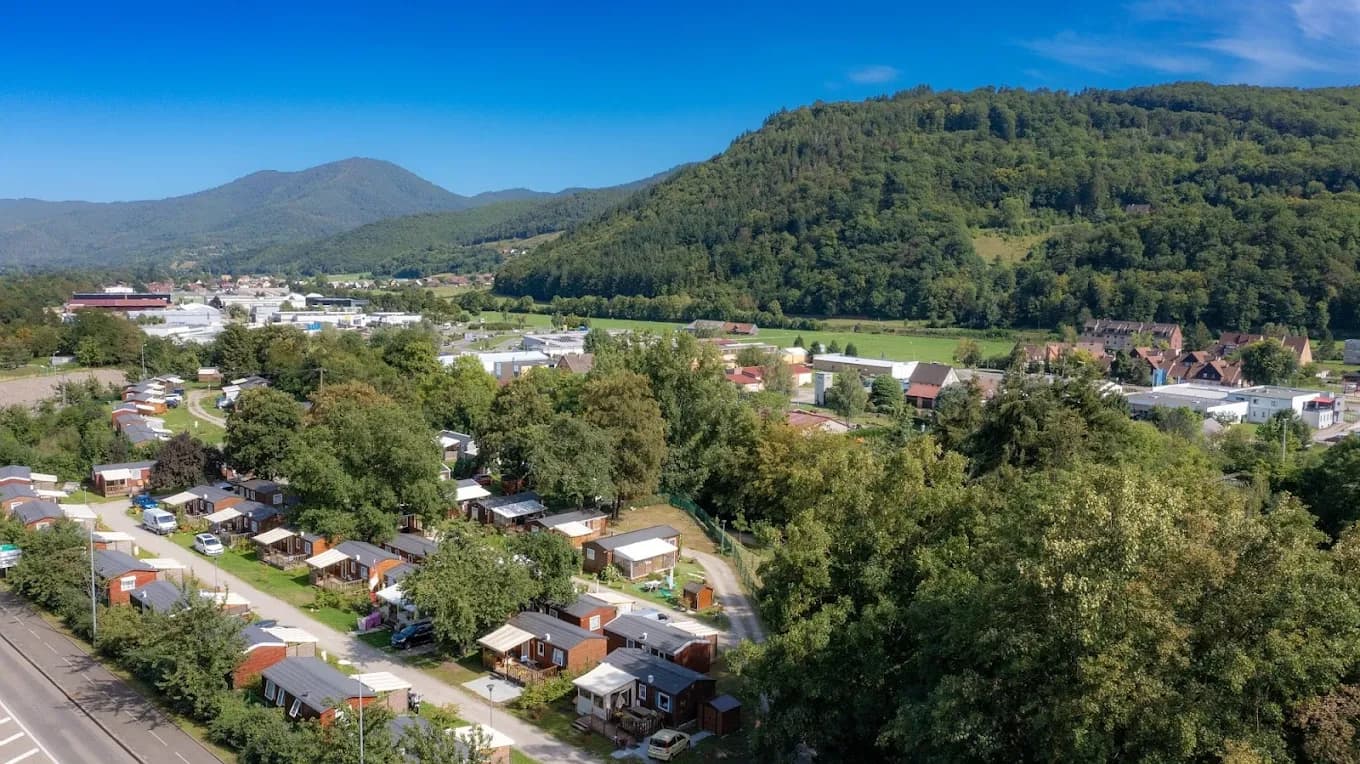 90 km · 77 min driveHomair - Camping Le Parc de la Fecht MunsterWave Pool And Pentagliss Nearby · Mountain Nature Park SettingView campsite
 95 km · 79 min driveHomair - Camping L'Ile du Rhin BIESHEIMRhine Riverside • Waterfront Setting · Discover France, Germany, Switzerland & Europa-ParkView campsite