



Civita di Bagnoregio
At a glance
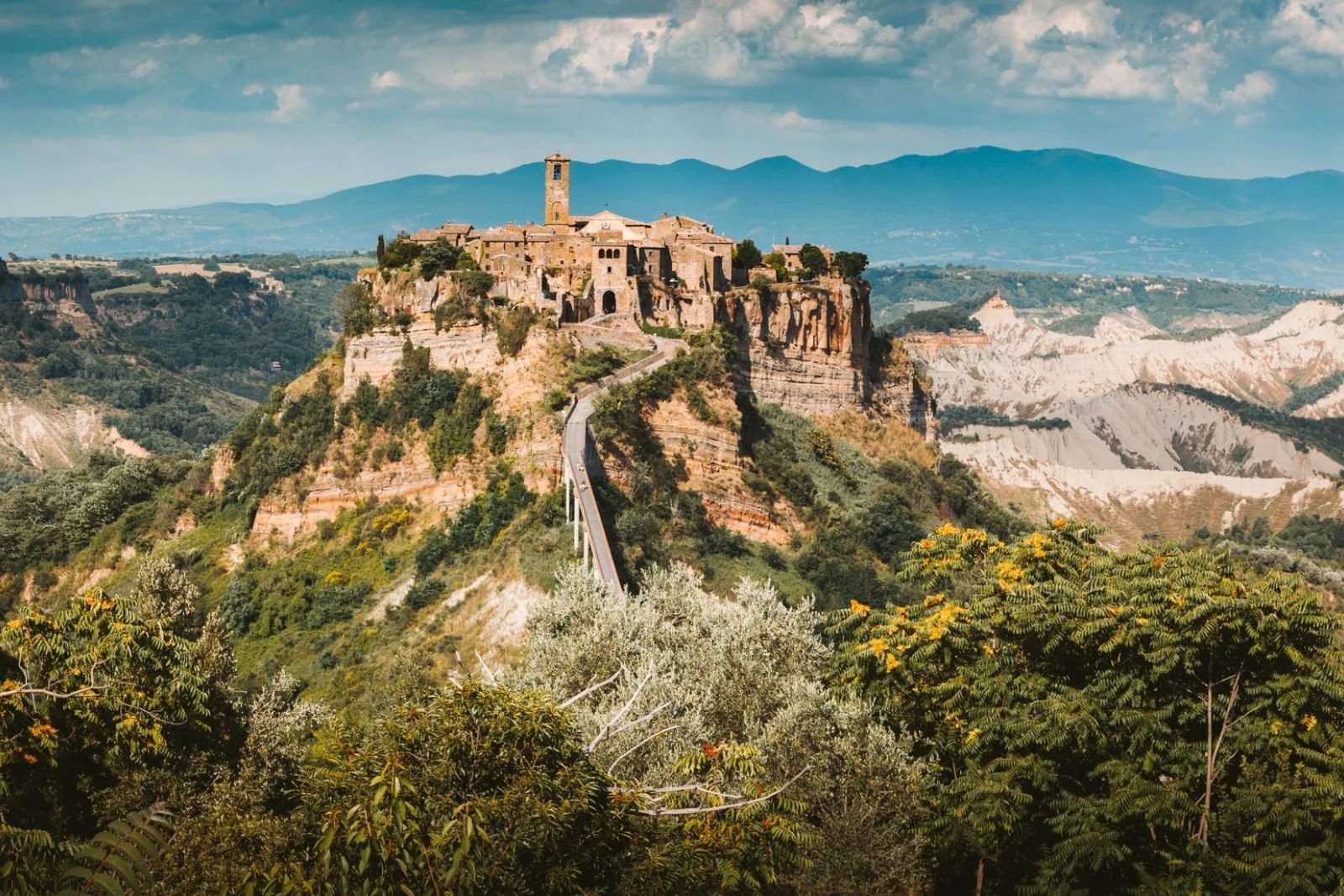
Cross a 300 m footbridge to a car-free Etruscan village on a crumbling tufa spur in Lazio. Civita di Bagnoregio, the Dying City, is a magical camping day out with silent lanes and big valley views.
- Famous Footbridge Walk 300 m across the valley to a village in the sky
- Etruscan Heritage Explore a settlement with more than 2,000 years of history
- Car-Free Lanes Wander cobbled alleys in rare, peaceful silence
- Cave Museums Peek inside an Etruscan cave and a landslide museum
- Photo Views Free Belvedere panoramas over the valley of the calanchi

What to see in Civita di Bagnoregio
Perched on a tufa spur in the valley of the calanchi, Civita di Bagnoregio can only be entered on foot, across a 300 m concrete bridge inaugurated in 1965. Begin at the free Belvedere in Bagnoregio for the classic view, then walk down to Mercatello, where the bridge begins.
- Porta di Santa Maria: the gateway cut into the rock in Etruscan times and adapted in the Middle Ages.
- Piazza San Donato: the village square, home to the Romanesque Church of San Donato with a wooden crucifix from the school of Donatello and a fresco from the Perugino school.
- Museo Geologico e delle Frane: in Palazzo Alemanni, with sections on landslides, fossils, history and Civita itself.
- Antica Civitas: a small museum inside an Etruscan cave where farmers lived around 1930.
- Grotta di San Bonaventura: an Etruscan tomb reused as a medieval chapel, set into the cliffside.
Look out too for the remains of St Bonaventure's house, and in early June the Palio della Tonna, a donkey race on Piazza San Donato.

Tickets, opening times and parking for Civita di Bagnoregio
Entering the village requires an admission ticket. Booking online is the smoothest option, as it takes you quickly and directly to the bridge. You can also pay through the Civita di Bagnoregio app or at the ticket office. Civita is open all year, and a visit takes about three hours, or half a day with lunch and the museum.
Early morning and late afternoon are the calmest and coolest moments, with lovely light for photos. Autumn is a peaceful season too.
- Piazza Alberto Ricci: the closest car park, by the Belvedere. Ideal on weekdays or early in the day.
- Agosti: a few metres further on.
- Piazzale Battaglini: the car park with the most spaces, 1.3 km from the bridge, with a shuttle to the Belvedere.
The village is car-free and the bridge entrance at Mercatello lies in a ZTL, so use the signed car parks.

Where to stay near Civita di Bagnoregio
Civita di Bagnoregio lies in northern Lazio, between Lake Bolsena to the west and the Tiber valley to the east. Viterbo is 28 km away and Rome 125 km, which makes the area an easy base for a countryside holiday.
Staying at a campsite in the area lets you set your own pace. You can leave early, reach the car park before the day warms up, cross the bridge in soft morning light and be back at your pitch in time for a relaxed afternoon and a long evening outdoors.
From the A1 motorway the village is straightforward to reach. Coming from the north, take the Orte exit and continue towards Viterbo and the Teverina road. Coming from the south, take the Orvieto exit and drive towards Bagnoregio.
A camping holiday also gives you room to combine Civita with other sights in the area. Ask our team to help you choose a campsite that suits your trip.
Practical info
- Time needed
- Plan about three hours in the village, or a relaxed half day with lunch.
- Best time to visit
- Early morning or late afternoon gives cooler air, softer light and a peaceful village.
- Tickets
- Book online for quick, direct access to the bridge, or buy at the ticket office where the bridge begins.
- Getting there and parking
- Drive to Piazza Alberto Ricci or Agosti, or to Piazzale Battaglini, which has the most spaces and a shuttle to the Belvedere.
- Food and drink
- Café, restaurants and shops in the village; booking ahead is wise in high season.
- Season
- The village is open all year round, with a lively programme in early summer.
A day at Civita di Bagnoregio from your campsite
- 08:00Leave your campsite and drive to Piazzale Battaglini, the car park with the most spaces.
- 08:45Take the shuttle to the Belvedere, or stroll the 1.3 km if the morning feels fresh.
- 09:15Take your first photos from the free Belvedere in Bagnoregio, then head down to Mercatello, where the bridge begins.
- 09:45Cross the 300 m bridge and step through the Etruscan Porta di Santa Maria.
- 10:30Explore Piazza San Donato, the Romanesque church and the Antica Civitas cave museum, then visit the Museo Geologico e delle Frane.
- 12:30Lunch in the village, or in Bagnoregio, with a glass of local wine.
- 14:30Walk back over the bridge and return to your car at Piazzale Battaglini.
- 16:00Back at the campsite for a cool drink and a relaxed evening under the trees.
Book your ticket online for quick access straight to the bridge.
Shade is limited, so bring water, a hat and sun protection.
On weekdays or very early in the morning, Piazza Alberto Ricci is the closest car park to the Belvedere.
Tip from our specialist
Our tip: do Civita di Bagnoregio in two acts. Arrive early, park at Piazzale Battaglini, and take the shuttle to the Belvedere in Bagnoregio. The view is free and gives you the best first photo before the bridge. Then walk down to Mercatello and cross the 300 m bridge with your ticket booked online, so you go straight through. Once inside, slow down. Pause in Piazza San Donato, duck into the Antica Civitas cave, and book lunch in the village if you travel in high season. The quietest, most atmospheric moments come in the early morning and late afternoon, when the tufa glows and your footsteps are the only sound. Pack water and sun protection, because shade is limited, and wear comfortable shoes for the cobbles. Finish the day back at your campsite with a cold drink.
Civita di Bagnoregio and our campsites on the map
Civita di Bagnoregio Campsite, click to view the campsite
Frequently asked questions about Civita di Bagnoregio
Do you have to pay to visit Civita di Bagnoregio?
How long is the bridge to Civita di Bagnoregio?
How long do you need in Civita di Bagnoregio?
Why is Civita di Bagnoregio called the Dying City?
When is the best time to visit Civita di Bagnoregio?
Is Civita di Bagnoregio fun with kids?
Where can you park when visiting Civita di Bagnoregio?
Campsites near Civita di Bagnoregio
9 campsites within 100 km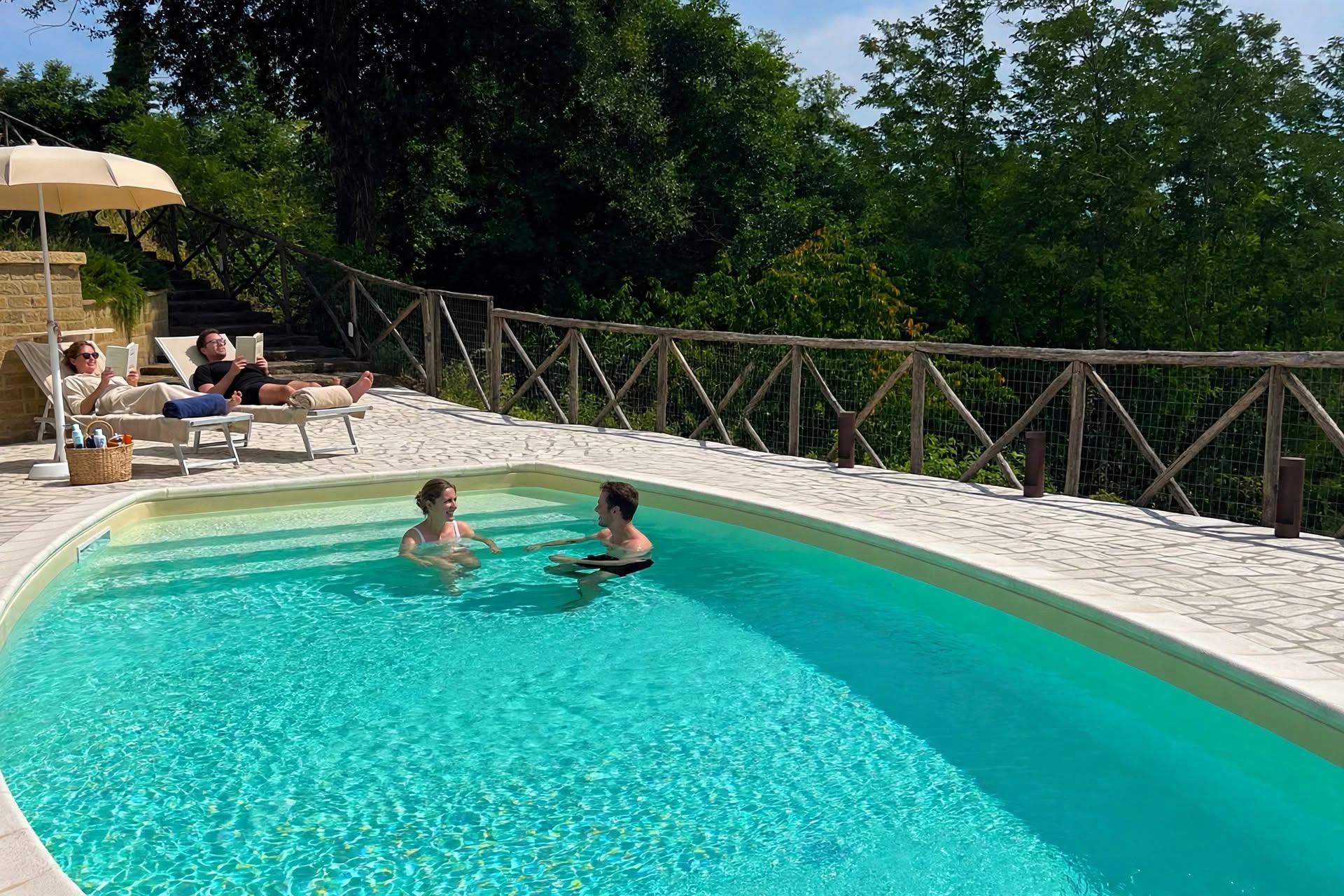 36 km · 45 min driveValleverna Agriglamping ValentanoLake-View Pool With Solarium · Lake Bolsena Five Minutes AwayView campsite
 67 km · 59 min driveCamping Parco Delle Piscine Sarteano-SienaThree thermal pools, waterfalls, slides · Sarteano village, Tuscan hills, ancient EtruriaView campsite
 76 km · 92 min driveCamping Gitavillage California Montalto MarinaCar-free and tropical lagoon swimming pools · Direct private beach accessView campsite
 81 km · 99 min driveAzzurro Camping Village BraccianoPerfect for Nature Lovers · Peaceful Pied-à-terre for visiting RomeView campsite
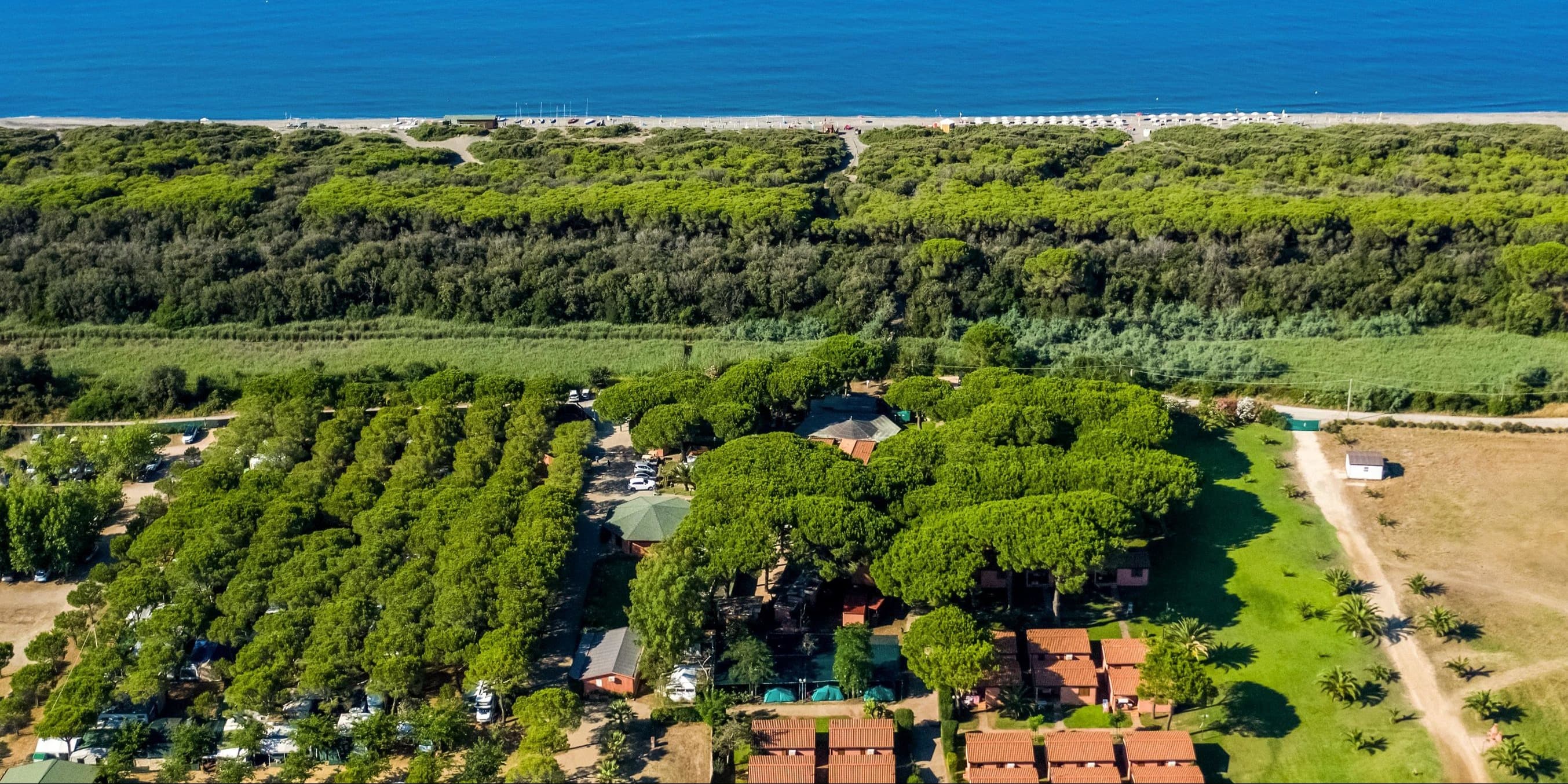 84 km · 94 min driveCamping Club Degli Amici Pescia RomanaSandy Beach Through Pine Forest · Dog Beach And Agility ParkView campsite
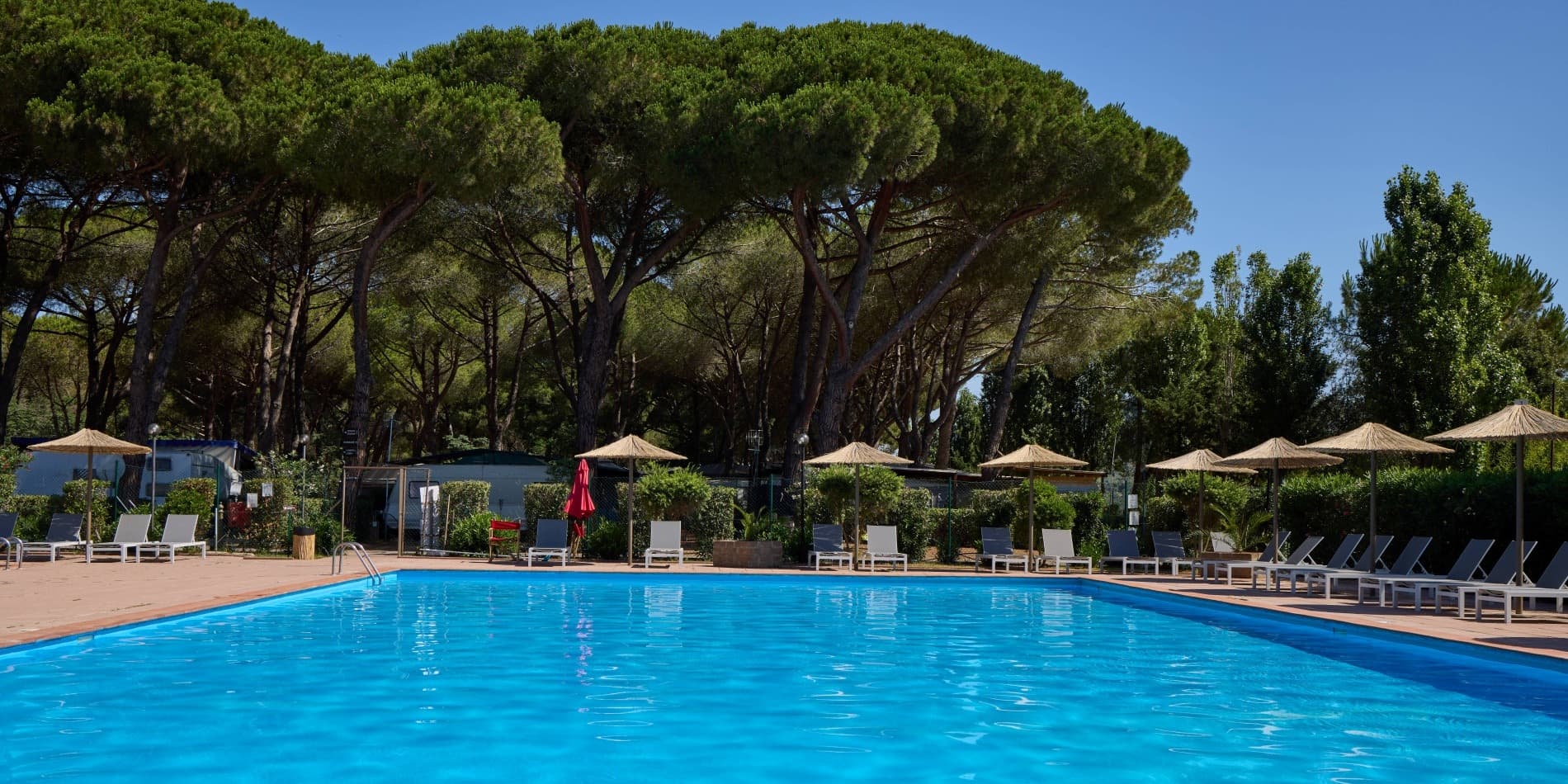 92 km · 100 min driveCamping Costa d'Argento Village Club CapalbioTwo swimming pools, children's pool, family fun · Maremma coastline, beach shuttle, Mediterranean natureView campsite
 96 km · 111 min driveGitavillage Argentario AlbiniaThree Pools With Waterfall Slide · Sandy Giannella Beach On FootView campsite
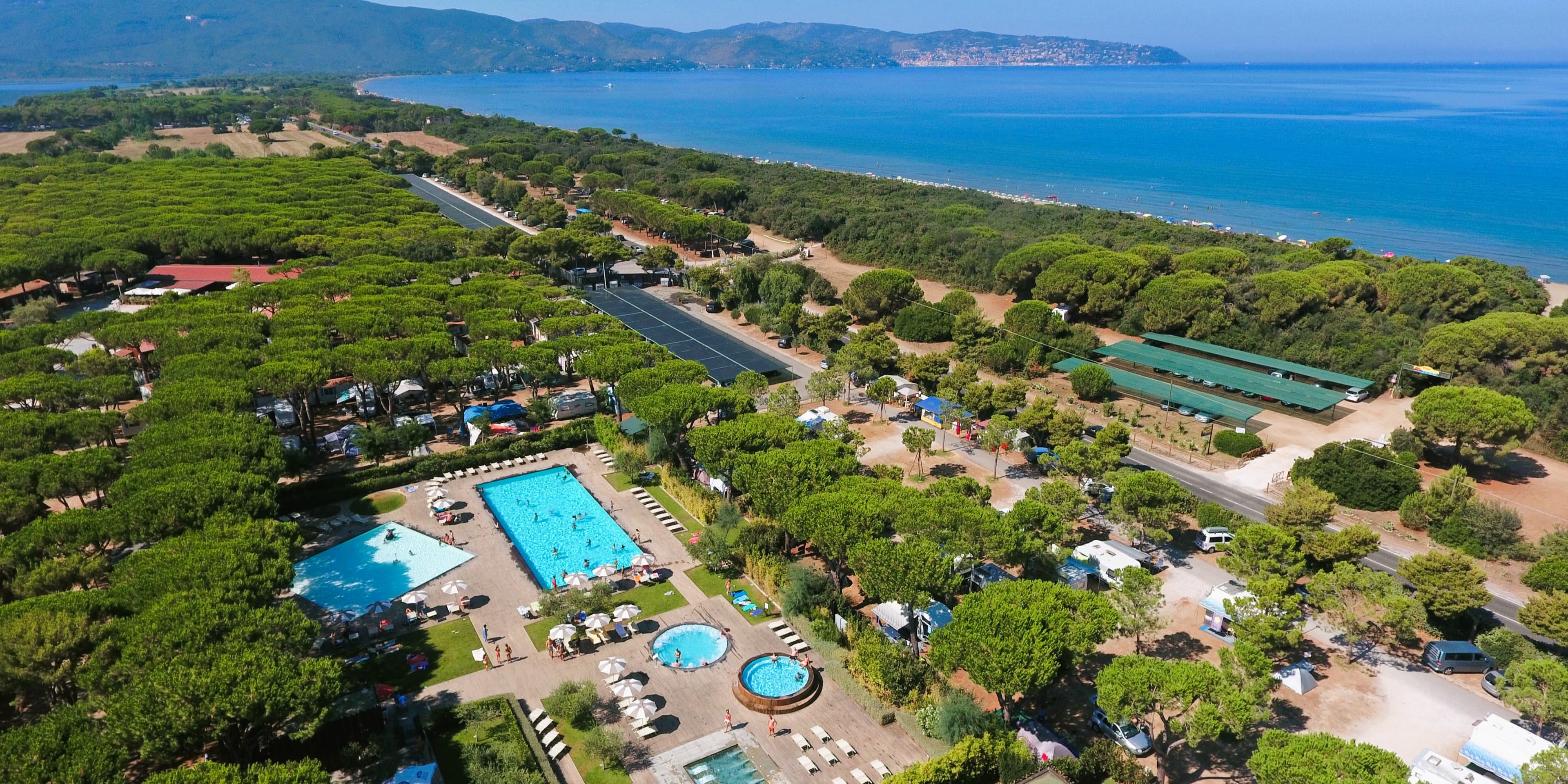 100 km · 115 min driveCamping Orbetello Family Collection Albinia, Orbetello (GR)Semi-Olympic pool, children's pool and whirlpools · Private sandy beach, lagoon and pine forestView campsite
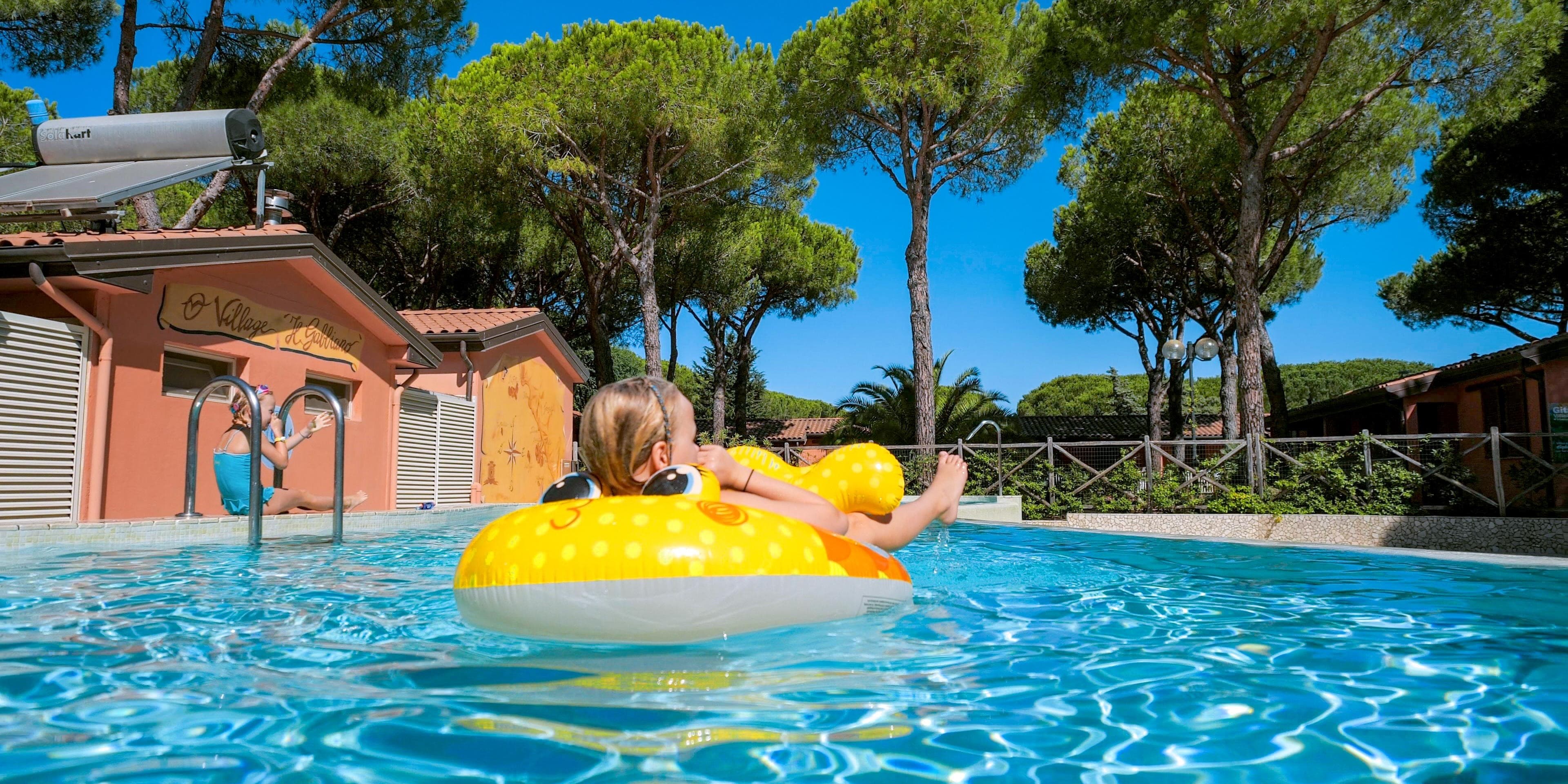 100 km · 117 min driveGitavillage Il Gabbiano AlbiniaSandy Beach, Shallow child pool · Shady Pine Forest, Natural Haven:View campsite
More to discover in Lazio
All about Lazio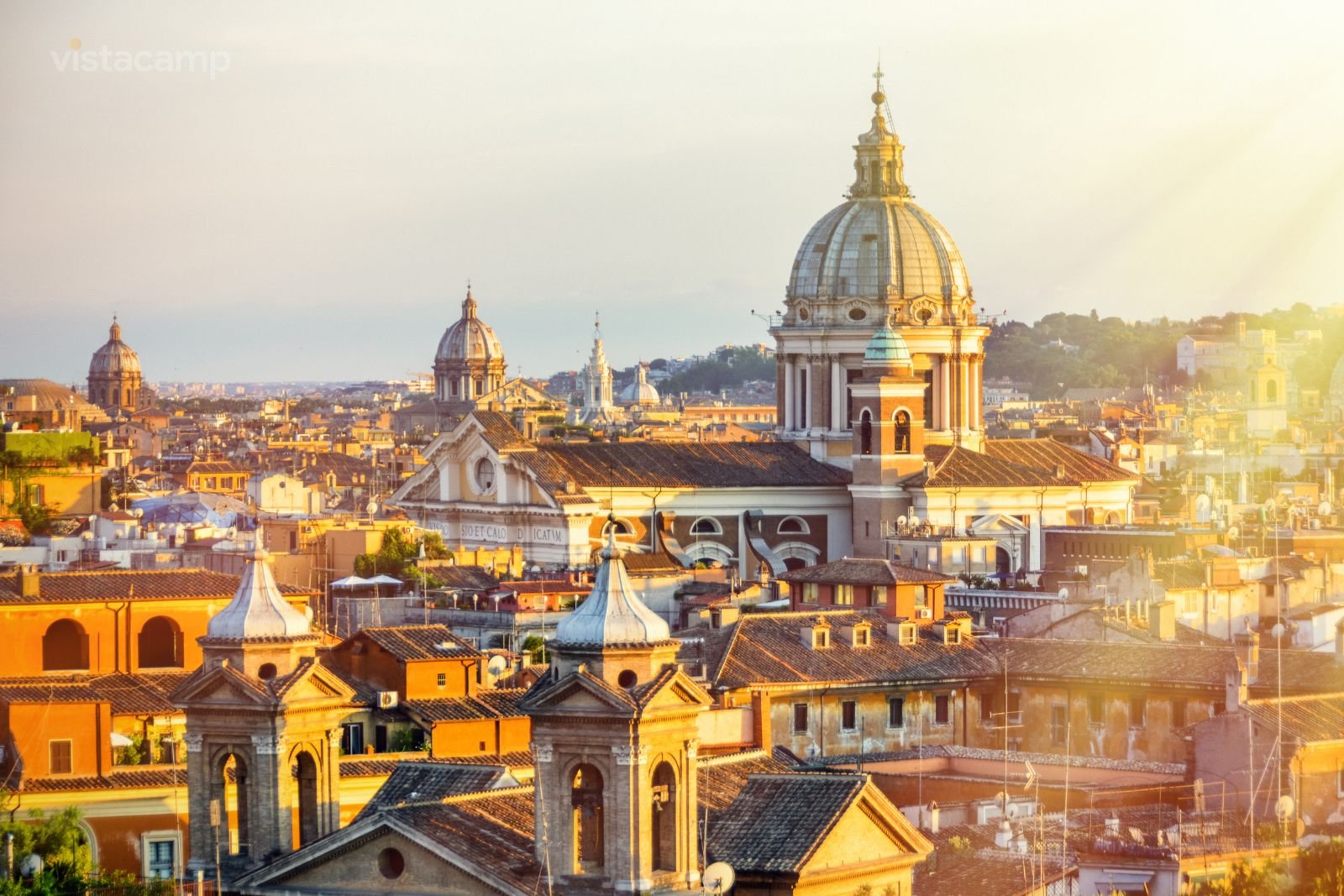 RomeRome is ancient history with a gelato in hand: gladiator arenas, baroque fountains and the Vatican, all within a day's reach of our Roman campsites, plus leafy parks where the little ones can run free.
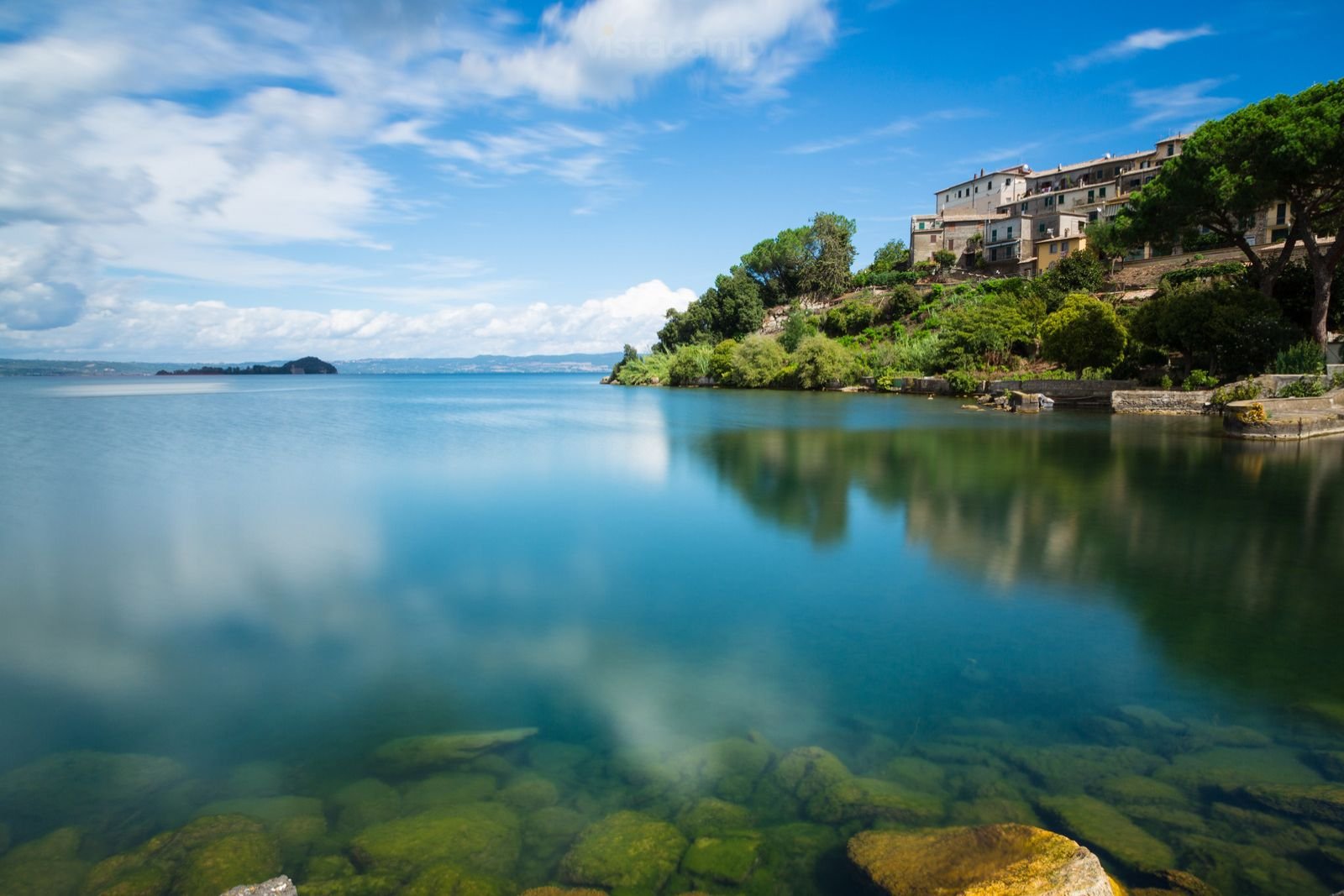 Lake BolsenaEurope's largest volcanic lake offers dark-sand beaches, pretty lakeside towns and a papal island to explore by boat, all set in the green heart of Lazio and perfect for a camping holiday.
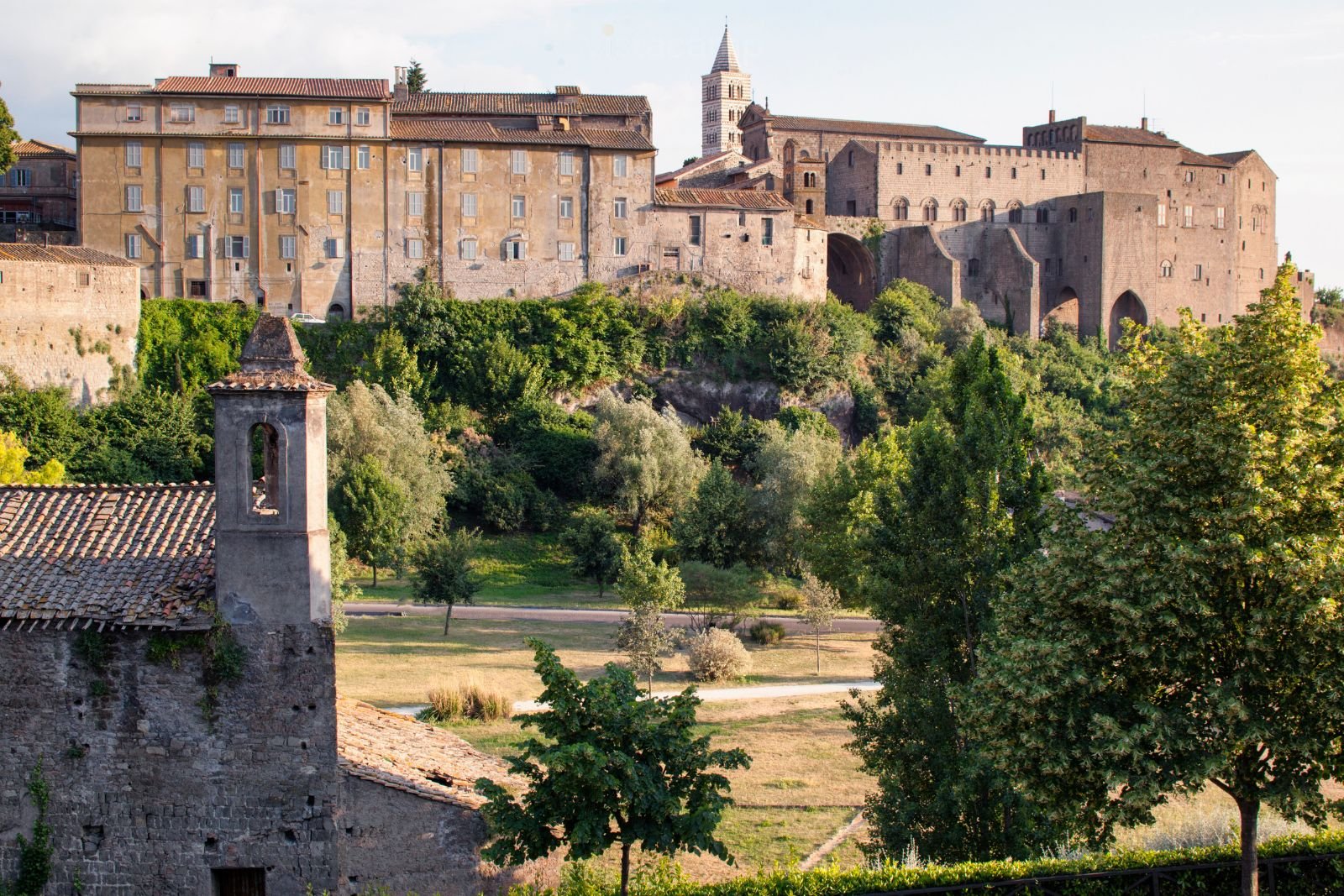 ViterboViterbo, Italy's City of the Popes, packs walled medieval lanes, a papal palace that hosted the first conclave, fountain-studded piazzas and steaming thermal pools into one easy, rewarding day out in Lazio.
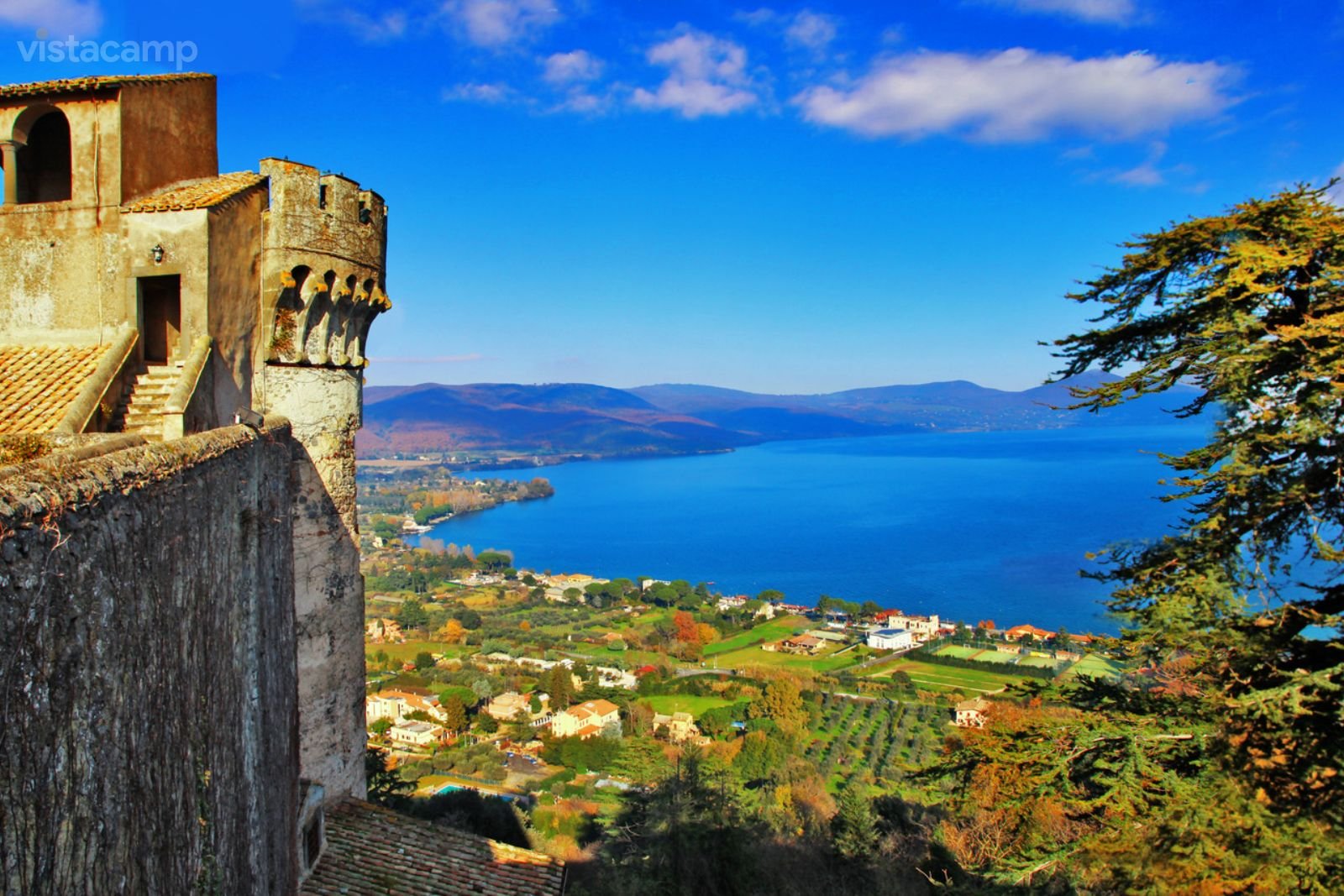 Lake BraccianoSwim in the clean volcanic waters of Lake Bracciano, just 32 km from Rome, then explore a mighty castle, lakeside villages and a sunny cruise between the towns. The perfect camping-holiday day out.